


"Dying Inside": The Growing Concern for Juvenile Delinquency
- The Spectator

- Oct 3, 2022
- 6 min read

As media develops more cases of juvenile crimes were revealed. The society gradually realized the significance of protecting the young generation, not only from being harmed, but also from harming others. As more and more cases of bullying, robbery, sexual harassments, and even murder occur, the modern society should reflect on the factors that lure juveniles to commit crime, and also investigate the solutions. Thus, the article aims to investigate the factors that motivated juveniles to commit crime while examining the effectiveness of government policies in combating such issue.
The ways that juvenile delinquency has been defined, perceived, and responded to have changed over time and generally reflect the social conditions of the particular era. An interesting fact is that even the definition of the term ‘juvenile’ remains uncertain in different areas in the modern society. In the majority of the country, juveniles are those under the age of 18. However, there are still exceptions, such as Iran, Indonesia, and Yemen. These three countries set the official adulthood age at 15 years old, which means that in these three countries, individuals start to take greater responsibilities at a much younger age.
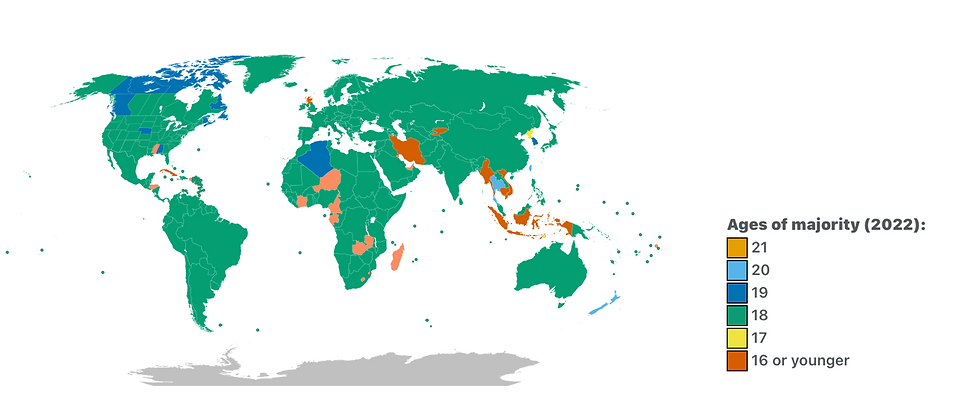
As the legal system in each country develops, the global society eventually came up with a definition to juvenile delinquency that generally fits the circumstances in different countries. Juvenile delinquency refers to the antisocial or criminal activity of the child (below 16 years of age for boys and 18 years for girls) which violates the law. In true context, that same activity would have been a crime if it was committed by the adult. But of course, in this article, the age will not be the determining factor to identify whether a crime is committed by a juvenile, since being old enough doesn’t necessarily means that one is mature enough to become an adult.
Causes of Juvenile Delinquency
Three of the most common causes of juvenile delinquency are domestic issues, imitation, and revenge.
A family plays a significant role in the development of an individual. Domestic issues can be one of the risk factors that lead to juvenile delinquency, such as domestic violence or parental indifference. These issues can be economic, social, etc. Take China as an example. In certain rural areas in China, parents often had to leave their children with their grandparents or other relatives in the countryside and work in the cities. For grandparents or other caregivers, it is challenging to pay attention and supervise these children so they do not end up in a bad environment. Improper surroundings may push a juvenile to commit a crime, because their minds are still immature, and may easily be altered by their surroundings. Any sort of improper, deviant behavior around them might affect the thoughts of the juveniles. This is partially why juvenile delinquency is becoming more and more common around the world.
An individual goes through several stages of social development, among which childhood is especially essential. It is the time when one’s value, attitude, mind of thoughts form. At this stage, family, especially parents, play an important role in a one’s life, since they are the ones that spend the most time with an individual during one’s childhood. However, at this stage, the behaviors and values can be easily changed and shaped due to the improper behavior of the family members, even if they didn’t mean to behave in such way. For example, a child might imitate the smoking action of of the father, or they might imitate the shooting action of a movie character. These imitations seem to be interesting, but it might also plant the sense of violence in the mind of the children. Furthermore, as we grow up, the major influence to us change from our family to our peers and friends. The gang subculture among teenagers is a major factor that leads to juvenile delinquency. It is a common phenomenon in China to see small groups of students spending almost all their time together. Gradually, they start to affect each other’s behaviors. During this process, if members in these small groups starts behaving in a deviant way, then it is likely that the whole group will behave in such way. This is due to imitation.
Often, potential perpetrators are the victims of violence. Individuals may confront violence in a variety of social settings: in family, school, etc. They experience domestic violence, school bullying, cyber-bullying, and are afraid of speaking to authorities, such as parents, teachers, and even police officers. Eventually, these groups of youth face two different paths: they either keep on being oppressed, or they become perpetrators themselves. This is how violence create perpetrators. It not only harm the victims, but also lures them to become potential abuser.
The Government's Response
For juvenile delinquency in today's world, most countries have downplayed the concept of applying penalty to juvenile delinquency, using instead security punishment, educational punishment and other non-penalty treatment measures. The purpose of juvenile criminal investigation focuses more on education reform. Article 18 of the United Nations Standard Minimum Rules for Juvenile Justice states: "A wide variety of treatment measures may be used by the competent authorities to give them flexibility and thus maximize the avoidance of imprisonment. Some of which may be combined.”
The Chinese government holds a relatively looser attitude to juvenile delinquency. Overall, there are four common non-penal treatment methods regarding juvenile delinquency used:
Family discipline As mentioned, there is a close relationship between juvenile delinquency and parental education. The judicial authorities may order the parents to strengthen control and education over the juveniles and report to the specialized agencies on a regular basis, so as to encourage the delinquent young people to repent and turn to good and help themselves. Of course, this method is used only when the crime committed is not that serious.
Work-study education Work-study education is a special form of education in China to educate and save the delinquent youth. It is an effective method to correct the delinquent juveniles by integrating the functions of control and correction.
Social help and education The judicial authorities may order the school, company or township organization where the juvenile delinquent belongs to be responsible for the daily help-education and take effective measures to assist the specialized organizations in the education to the juvenile delinquent.
Community Service Juvenile delinquents who are not subject to criminal punishment can be required to complete a certain amount of public welfare labor in places under instructions so that they can receive help and education in labor.
The United States Supreme Court’s involvement in the area of juvenile justice greatly altered both the process utilized and the protections offered to juveniles within the system. The Court’s seminal opinion is In re Gault, one of the most famous juvenile delinquency cases in the United States. The juvenile in that case was found to be delinquent after two hearings. He was sent to a reformatory for six years. The Supreme Court held that juvenile actions were different in nature from adult criminal proceedings. Still, the juvenile actions were covered by the Due Process Clause of the 14th Amendment to the United States Constitution, because the children were ultimately punished, at least to the extent that they could not live the lifestyle previously enjoyed.
Until very recently, the juvenile justice system in the United States was quite concerned with treating young people differently than adults in terms of the criminal process and its sanctions. One commentator noted that, historically, the American juvenile judges were directed to process juveniles “in a non-punitive and therapeutic manner.” We have seen, however, a dramatic change in attitude over the past two decades. Public perception has shifted in its view of juveniles and the juvenile justice system. Many Americans now conclude that juvenile crime has risen significantly, particularly violent crimes by ever-younger people.
In fact, the evidence regarding juvenile crime rates is decidedly mixed. While some studies state that “juvenile violence has spread like an epidemic,” others point out that juvenile crime has “dropped significantly over the past several years.” Whatever the empirical basis for the conclusion, it is clear that the American public and legislators in the area of juvenile delinquency have become convinced that more violent juvenile crime exists and that a harsher process for juvenile crime adjudication is necessary in order to respond to a crisis situation. As a consequence, considerably more cases may be found today in which juveniles are being transferred to adult criminal courts and tried as criminals rather than as juvenile transgressors. Juveniles found guilty are being punished more severely than in years past. This is significantly different from the response of the Chinese government, as the article has provided.


Comments